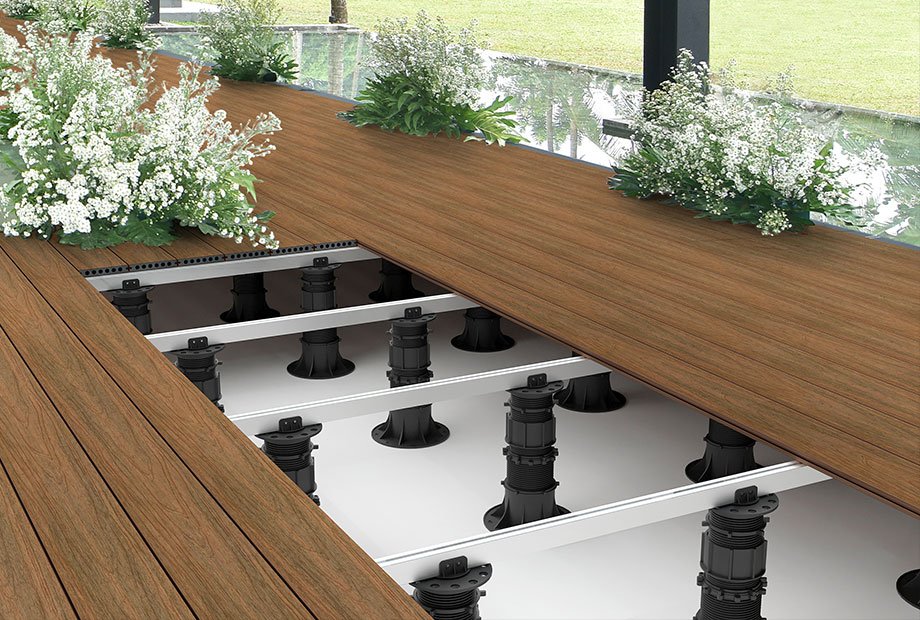
When a team in Manhattan or Brooklyn decides to add an elevated walking surface over a low-slope roof, the conversation almost always lands on a roof deck pedestal layout. That choice is sound: pedestals keep the waterproofing accessible, create a drainage void, and allow installers to correct plane issues with millimeter-level adjustments. The problem is not the concept; it is how late certain constraints enter the drawing set. In New York City, late surprises cost money because every change competes with facade access, crane calendars, and roofing trade sequencing.
The first mistake is treating the roof deck pedestal system as a finish package instead of a structural and waterproofing interface. Pedestals bear dead load from pavers or joists, concentrate reactions at the base plate, and must coexist with insulation, cover boards, and often a protection sheet specified by the membrane manufacturer. If those layers are not coordinated, you can end up with a pedestal height range that cannot reach the door threshold without violating the guardrail height or creating a step that fails accessibility review. Early coordination means asking the roofing consultant for the approved stack and then modeling the finish elevation at every exit, not only at the “pretty” corner of the roof.
Drainage, drains, and the path water actually takes
A second common miss is assuming that “pedestals imply drainage” without proving the plan to the roof drain or scupper. A quality roof deck pedestal system preserves a clear air and water path under the finish, but the roof still needs engineered slope to points of discharge. In NYC, debris from nearby construction, pollen, and even shingle grit from distant re-roofs can find its way onto amenity roofs. That makes strainer maintenance and accessible drain locations more important than in renderings. If a drain sits under a heavy planter line that cannot be moved, you are designing a future emergency for the building staff.
Logistics before beauty
Third, teams underestimate how pedestals arrive and move vertically. A roof deck pedestal shipment is dense. Pallets may not fit a passenger elevator intended for a penthouse retrofit. If the only path is a window hoist or a street crane, that cost belongs in the budget before VE discussions begin. Likewise, weather enclosures: installing pedestals during membrane-sensitive seasons may require temporary protection that the roofing warranty demands.
What good early documents include
Helpful early packages name the finish type, show a typical section from membrane to walking surface, call out height adjustment range, and identify who verifies slope at mockup. They also list wind-uplift assumptions for paver systems so the structural engineer can respond before bid day. None of that replaces code compliance or peer review, but it prevents the awkward moment when a contractor explains that the specified pedestal cannot achieve the height shown at the door.
Agency review in NYC is a schedule item
Depending on scope, a rooftop assembly may touch multiple review paths: structural allowances for added dead load, egress and guardrail geometry, energy code implications if insulation thickness changes, and fire continuity where penetrations multiply. A roof deck pedestal system rarely changes occupancy by itself, but it can change how inspectors read guardrail bases, door landings, and edge conditions at parapets. When those items are drawn generically, field decisions migrate to RFIs. RFIs on a fast-track New York City job are where contingency disappears.
Owners sometimes ask whether a pedestal layout can be “value engineered” after pricing. Small changes—like switching from large-format porcelain to a thinner paver—can alter bearing pad sizes, wind clips, and pedestal spacing. Those are manageable if the pedestal manufacturer’s engineering letters still cover the assembly. They are painful if the change invalidates a tested combination. Naming acceptable alternates up front, with equal structural and drainage intent, keeps the roof deck pedestal story honest through bid leveling.
If you are planning a rooftop in any of the five boroughs and want a second set of eyes on your roof deck pedestal notes, reach out with a partial set. We routinely align pedestal layouts with New York State climate realities—humid summers, freeze-thaw upstate transfers for portfolio owners, and coastal exposure for Long Island-adjacent sites—while keeping language clear for boards and residents who are not construction professionals.