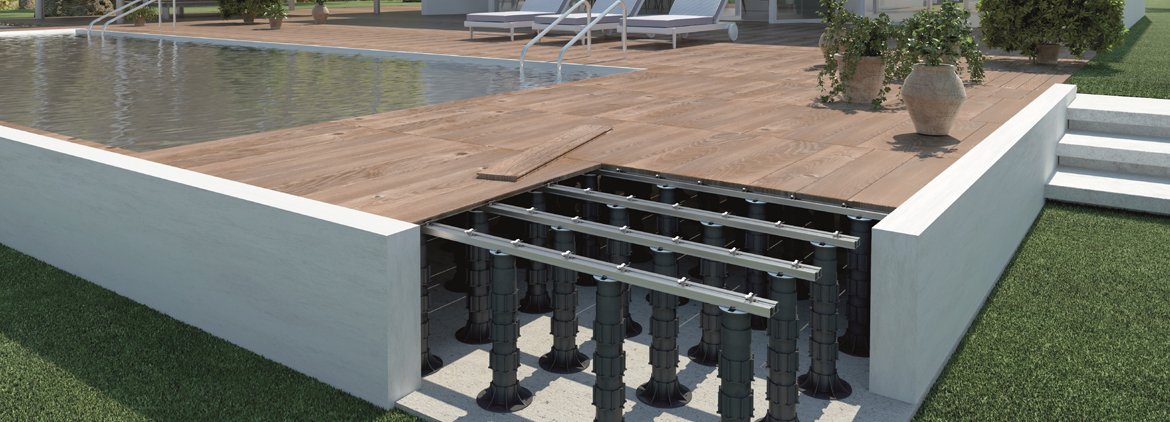
The most expensive line item on a rooftop is not the roof deck pedestal box count; it is the waterproofing assembly beneath it. In New York City and across New York State, roofing consultants routinely require protection boards or mats between the membrane and anything that could abrade, puncture, or concentrate load. Pedestals spread weight better than a continuous adhesive bed, but each base plate still imposes a reaction. If the cover board is too thin or the wrong density, you can dimple the substrate or telegraph irregularities into pavers above.
A complete roof deck pedestal system submittal should therefore read as a stack, not as a product cut sheet in isolation. Start at the structural deck, move through insulation and cover boards, add the membrane and any slip sheet, then show the protection course compatible with both the membrane manufacturer and the pedestal manufacturer. When those two manufacturers disagree, resolve it before procurement. Field arguments over “who voided whose warranty” are never cheap.
Point loads and paver corners
Large-format porcelain looks crisp on luxury roofs from Hudson Yards to Buffalo waterfront condos. The corners behave like little knives under impact unless bearing pads are sized and centered. Pedestal heads with wide platforms and rubberized shims distribute stress. If installers omit shims or rotate heads incorrectly, point loads spike. The membrane may survive commissioning and fail three years later when freeze cycles exploit a tiny crush line. Training matters: a roof deck pedestal is adjustable, but adjustment does not fix fundamentally wrong bearing geometry.
Inspection ports and conscience details
Some projects include removable paver bays or labeled lift points so consultants can observe water flow after big storms. That idea sounds administrative until you are the owner staring at a mysterious leak that could be a door, a rail post, or a drain. Thoughtful roof deck pedestal system documentation names who lifts what, how pavers are stacked safely during inspection, and how pedestals are re-set without changing slope.
Contractors in New York know that winter shutdowns delay roofing. If pedestals are staged on a partially complete stack, protect the membrane from foot traffic with methods approved by the roofer. Never allow loose pedestal bases to slide on TPO during high wind events; that is how scuffs become leaks.
We help teams in New York State align protection courses with pedestal bases so the assembly is boring in the best way—boring to litigators, boring to insurers, boring to the sleep of residents under the roof. If your drawings show a roof deck pedestal line sitting directly on insulation with no protection layer, pause and ask the roofing consultant to name the approved alternative in writing.
Send your roofing section and finish plan; we will mark up the stack in the language your subtrades already use, with NYC logistics in mind when the site is tight and upstate staging when the site is wide but weather-sensitive.