Journal/Structural
Manhattan amenity decks: pedestal load paths that satisfy review
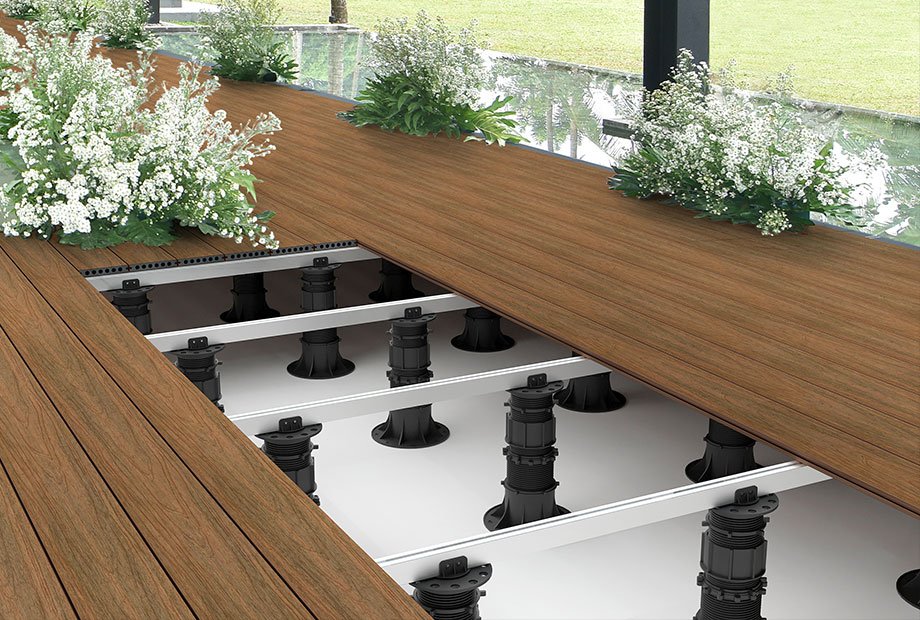
Manhattan amenity roofs carry a social weight long before anyone calculates pounds per square foot. Residents expect planters, lounge clusters, and sometimes fitness equipment. The structural engineer models live loads accordingly, but the physical world still resolves forces through discrete roof deck pedestal reactions into cover boards and insulation. If drawings do not show how that resolution happens, contractors improvise, and improvisation is how cover boards crush at hot spots.
A credible roof deck pedestal system narrative for NYC includes spacing, height range, and the manufacturer’s letter showing allowable loads for the selected head and base. It also acknowledges hardscape transitions: where a pedestal line ends at a unit paver threshold, where it meets a poured curb, and where it steps down at a roof drain sump. Each transition is a load path question as much as a waterproofing question.
From paver corner to slab
Think vertically. Paver self-weight transfers to pedestal head tabs. The stem threads or stack modules carry compression into the base plate. The base plate spreads load onto the protection course, then cover board, then roof structure as designed. If any layer is softer than modeled, deflection increases and lippage follows. That is why high-traffic amenity decks in Midtown and FiDi often specify higher-density cover boards than a simple residential back-of-house roof.
Joist-borne decking on pedestals
When the finish is joist-supported composite or hardwood, loads include people, furniture, and sometimes hot tub proposals that should have been value-engineered back to “no.” The roof deck pedestal spacing must match joist span capability, and lateral bracing must be addressed so wind does not rack the frame. Manhattan wind is not abstract; it is the reason handrails vibrate on certain corners. Pedestals do not brace the deck laterally; clips, shear planes, or other hardware do.
Peer review in New York City sometimes asks for redlines on pedestal grids at changes in structural bay width. Those changes are common where towers step in. A uniform grid imported from a prototype floor may waste material or miss support at the worst location. Customizing the roof deck pedestal system layout per bay is normal on complex roofs.
We coordinate with engineers and architects to translate amenity programming into defensible pedestal maps. If you have a structural model and a finish architect’s paver module, we can help align them before the steel order locks assumptions that the roof deck later regrets.
Whether the project is a rental tower in Hell’s Kitchen or a condo near Central Park, the goal is the same: a roof deck pedestal system that is boring underfoot and exciting at the view—never the reverse.