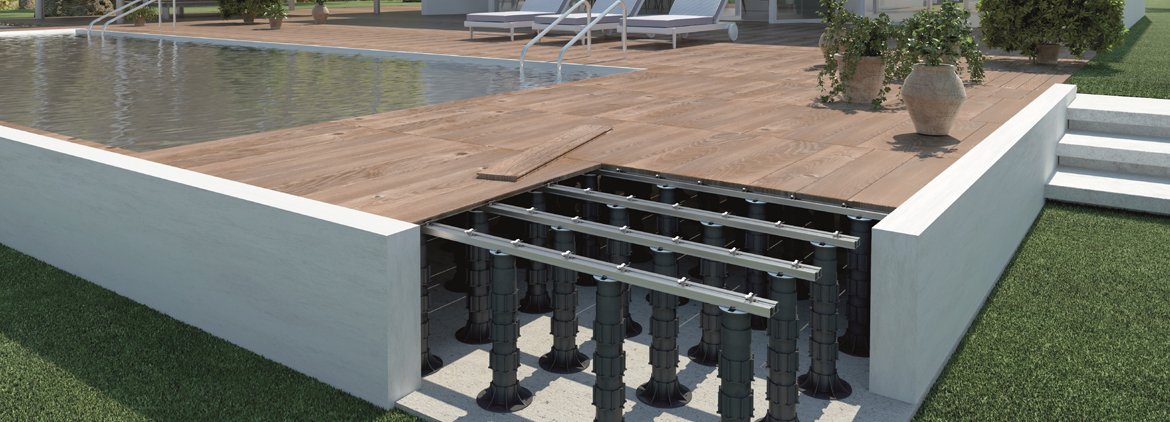
From the sidewalk, reviewers care about cornice lines, bulkheads, and rail silhouettes. They rarely object to how a paver sits on a roof deck pedestal because that relationship is invisible at street level. That does not mean the assembly is unimportant; it means the political risk concentrates on visible bulk and safety, while the engineering risk concentrates on what happens where tourists do not look.
A roof deck pedestal system helps historic-adjacent projects by keeping finishes loose-laid and serviceable, which can reduce invasive fastening through sensitive layers when coordinated with roofing consultants. It also allows careful leveling when existing structures are not planar. Those benefits should be explained in plain language to community boards who may fear “heavy modern decks” without understanding that pedestals can reduce membrane puncture risk compared to adhesives.
What still needs design love
Rails, planters, and pergolas remain visible. Their attachment through paver fields to structure must be engineered and coordinated with uplift and waterproofing. Pedestals do not remove those questions; they only provide a workable cavity in which answers can be built.
Documentation that helps approval
Renderings from human height on the roof matter for LPC-style conversations. Sections showing total height added by pavers and pedestals matter for zoning interpretations. Keep the roof deck pedestal stack dimensioned so reviewers see that you are not secretly adding a second bulkhead disguised as “just tile.”
We support architects preparing NYC historic presentations with simple diagrams of how a roof deck pedestal system preserves membrane access and drainage. We will not pretend to speak for landmarks commissions, but we can arm you with accurate technical language that builds trust.
Neighbors and light
Rooftop amenities can change light and air relationships with adjacent buildings even when parapets look unchanged from the curb. Shadow studies and privacy screens may enter the conversation. Pedestals do not solve privacy, but they do allow reversible changes to surface materials if boards request adjustments after a test season. That reversibility can be a political asset when opponents fear permanence.
Document sound and party policies alongside the physical roof deck pedestal assembly. Soft operations reduce complaints; reduced complaints reduce the odds that a rooftop becomes a litigation magnet. In dense New York City blocks, social design and hardware design share one roof.